




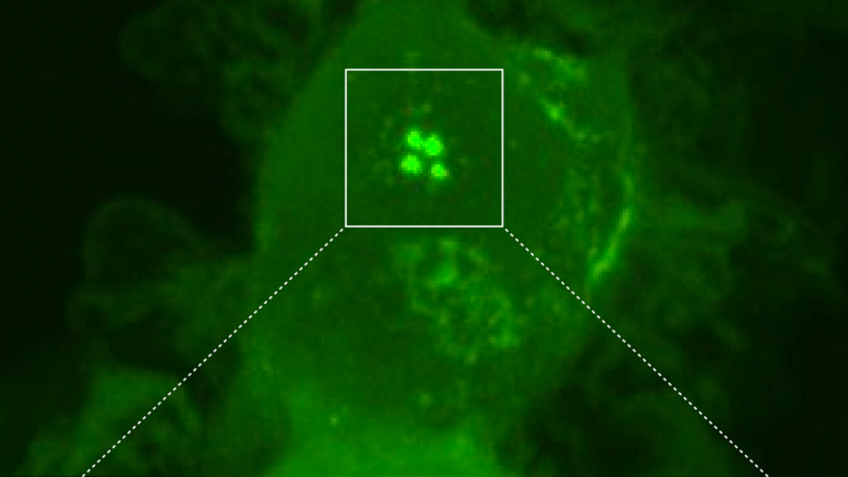
Centrosomes are small but essential organelles that play pivotal roles in cell division, embryonic development, and cell migration. By organizing and nucleating microtubules—the dynamic filaments of the cytoskeleton—they provide structural order and directional guidance within the cell. During mitosis, centrosomes define the poles of the mitotic spindle, ensuring accurate segregation of the genetic material into the daughter cells.
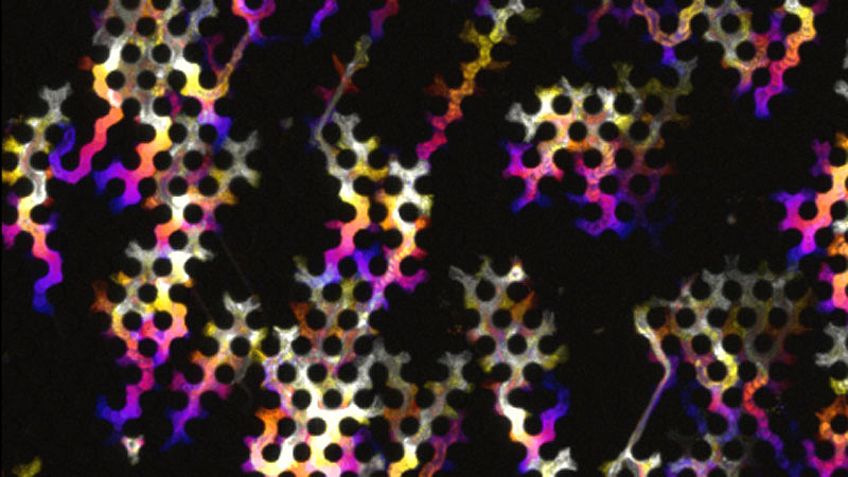
In the immune system, leukocytes such as dendritic cells rely on highly adaptable migratory behavior to coordinate communication between the innate and adaptive branches of immunity. Residing in peripheral tissues in an immature state, dendritic cells respond to pathogens by undergoing a maturation program that enables antigen uptake, processing, and migration to lymphoid organs. Within lymph nodes, they initiate adaptive immune responses by activating antigen-specific T cells. To fulfil these tasks, dendritic cells move efficiently through three-dimensional environments, navigating along paths of least resistance and dynamically adjusting their migration mode to the surrounding tissue architecture.
Our research group investigates how subcellular structures—particularly the cytoskeleton and centrosomes—govern immune cell behavior. We study how cytoskeletal organization shapes directed cell migration and maintains cellular integrity under physical constraint, and how microtubule-based processes in antigen-presenting cells orchestrate T cell activation and the initiation of adaptive immune responses. By combining advanced imaging, genetic engineering, and interdisciplinary approaches, we aim to uncover the fundamental cell biological principles that regulate immunity.
